
Common home repair situations
Home Repair Problems We Help With
Start with what you can see, hear, feel, or no longer use correctly. These pages explain common situations and when a small repair may point to a bigger issue.
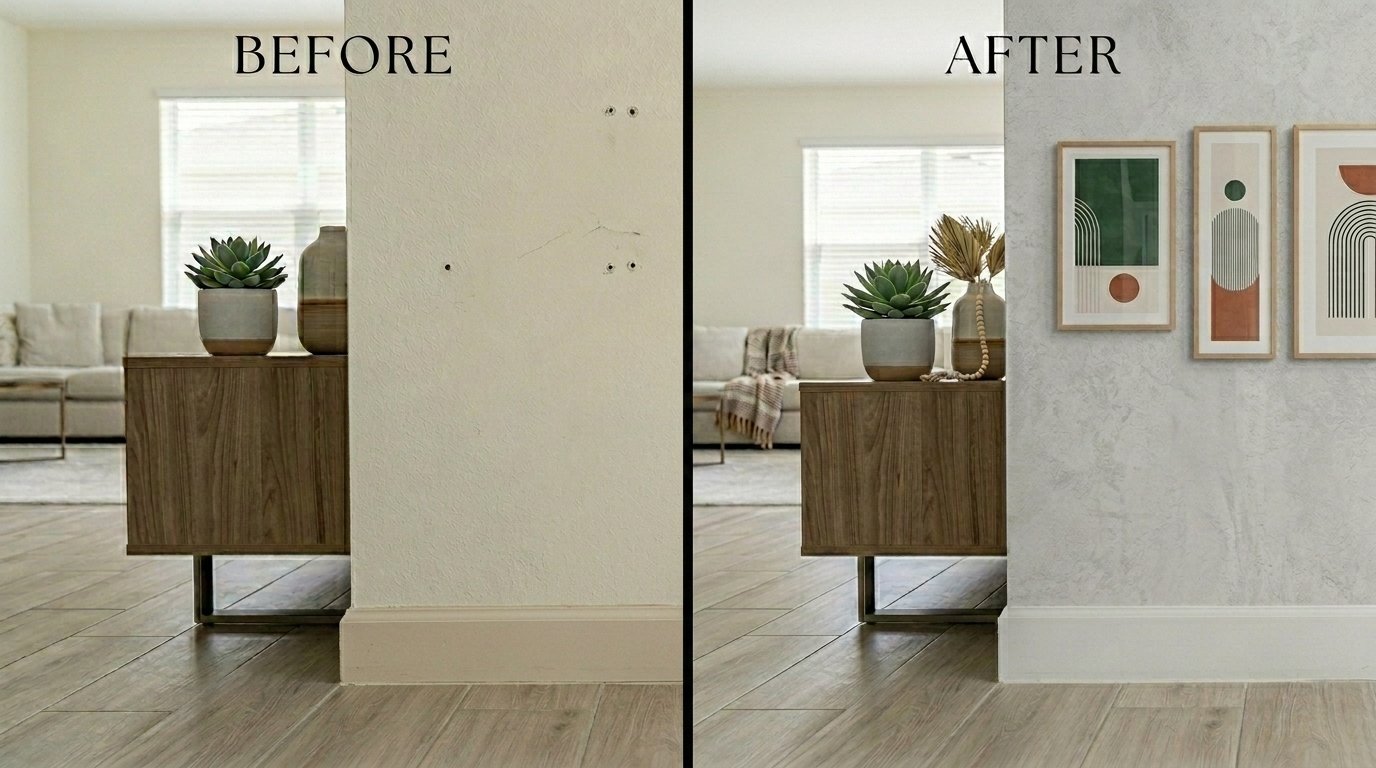
Problems are easier to discuss than trade labels. “The door will not latch,” “the ceiling patch cracked again,” and “the exterior trim opened after a storm” all give useful clues. Use the categories below to understand the issue, then follow the related service when you are ready to discuss repair.
Drywall & ceiling problems
Cracks, water damage, and failed patches need the cause understood before the finish is rebuilt.
Doors that do not work right
Hinge, latch, frame, or slab alignment can turn a simple door into a daily annoyance.
Difficult mounting & fixture jobs
Weight, height, access, and wall construction matter before drilling or lifting.
Exterior weather damage
Minor trim and roof-edge finish problems can worsen when water keeps reaching the area.
Inspection, sale & move-in lists
Many home repair problems show up all at once during a transition.
Describe the symptom before guessing at the cause
A useful repair message says what changed and when. Note whether a crack appeared after a storm, whether a door only sticks during humid weather, whether a wall patch failed in the same place twice, or whether an exterior trim piece moved after heavy wind. Those details can be more useful than trying to name the repair yourself.
Take one photo from several feet back and another close to the defect. If the problem involves a door, include the hinge side and latch side. For ceiling or wall damage, include any staining nearby. For exterior trim, include the roof edge and surrounding material when it is safe to do so.
Know when a small repair is no longer small
Handyman work is not a substitute for urgent help with active water entry, unsafe electrical conditions, major roof damage, structural movement, or unstable building components. Those concerns should be made safe and evaluated by the appropriate specialist before finish work begins.
After the source is corrected, many of the remaining items become straightforward: patching drywall, adjusting doors, reinstalling suitable hardware, repairing small finish areas, or completing a punch list. The order matters because a cosmetic repair should not hide an active problem.
Patterns that help narrow down a household problem
Timing matters. A door that began rubbing after a long humid spell may have a different story from one that changed suddenly after impact. A ceiling crack that has looked identical for years is different from one that is growing quickly. A drywall stain that appeared after a known plumbing leak is different from a stain that keeps returning with no known source.
Location matters too. Damage below a bathroom, near a roof edge, around an exterior opening, or directly beneath an air-conditioning line deserves context before patching begins. Heavy wall-mounted items need more attention to support than small décor. High fixtures need safe access as well as a suitable mounting point.
The problem pages below are meant to help you recognize those differences so you can describe the issue clearly when you call or text.
Do not hide a changing condition
Fresh paint, caulk, or patch compound can make a defect look better without solving it. If a crack is moving, a stain is returning, trim stays damp, or a door changes rapidly, note that pattern before any cosmetic work is done. A repair should follow the cause, not erase the evidence needed to understand it.
See a problem that looks familiar?
Share your repair list by phone or text so we can understand the scope before scheduling.