
Homeowner guides
Home Repair Knowledge Center
These guides are built for the questions that come right before a homeowner schedules work: what changes the price, whether something should be repaired or replaced, when another trade is needed, and how to organize repairs after a storm.
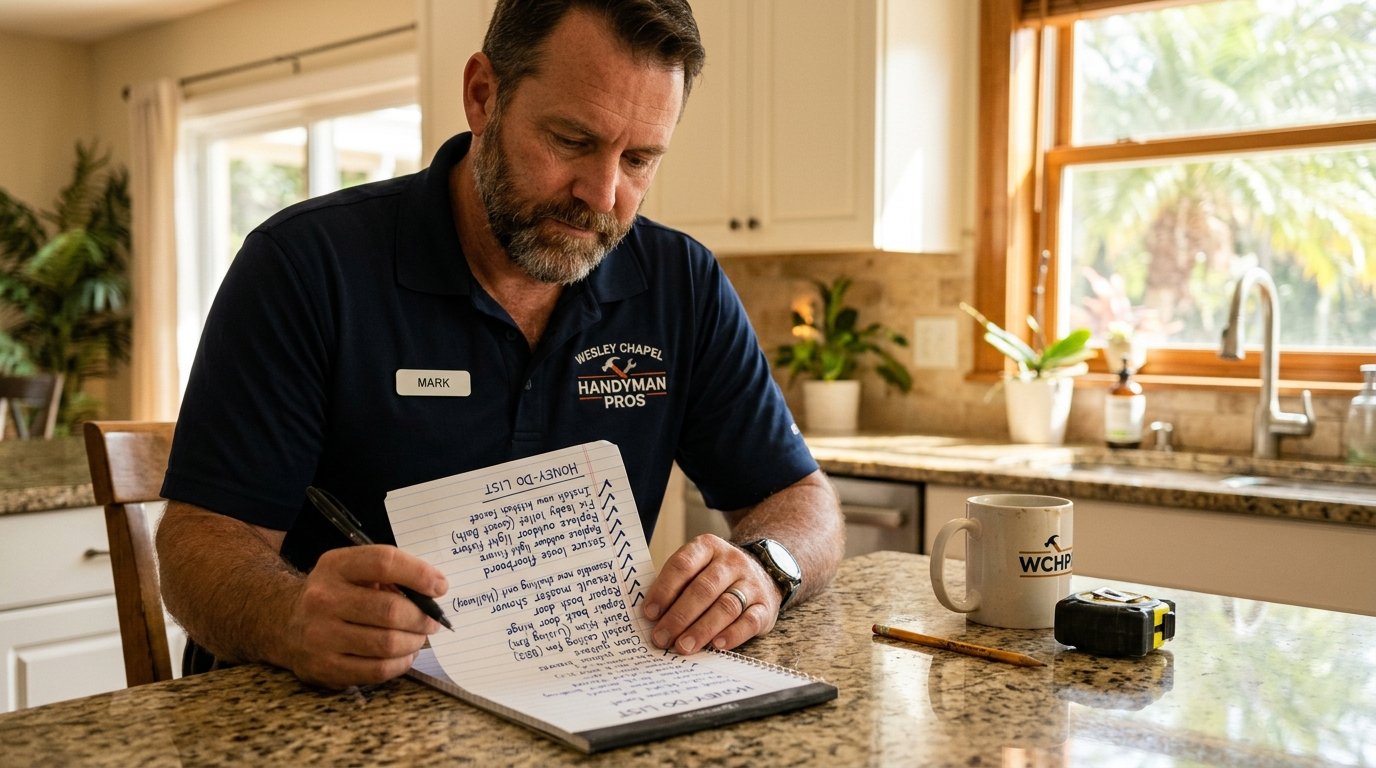
A good repair decision starts before tools come out. Clear project details can prevent wasted trips, wrong-size fixtures, poor material matches, and repairs that should have been referred to a specialty trade. Browse by decision below.
Cost planning
Understand the details that influence handyman and installation pricing.
Repair or replace?
Use condition, cause, function, and expected durability to make the decision.
Choosing the right kind of help
Know where small repair work ends and specialty work begins.
Storm repair decisions
Organize safety, documentation, major repairs, and the smaller finish work that follows.
Use these guides to prepare a real project conversation
Cost questions are easier to answer when they include quantity, dimensions, access, and product details. Repair-or-replace questions need information about age, damage, moisture, movement, and whether the part still performs its job. Permit and trade-boundary questions require an exact description of the work rather than a broad label such as “update the bathroom.”
Keep the decision tied to the property in front of you. A perfectly good replacement fixture can become the wrong choice if it does not fit the existing opening. A small drywall stain can be a simple finish repair after a one-time leak is resolved, or a sign that moisture is still active.
Keep records when timing or property value matters
During a move, sale, inspection follow-up, rental turnover, or storm repair, save photos, product information, receipts, and a short list of what was completed. Good records make it easier to explain the condition later and help prevent duplicate work. They are also useful when several people are involved in a property decision.
For storm-related damage, safety comes before documentation. Do not enter unsafe areas for a photo. Once the property is safe, organize visible damage by room or exterior side and keep major specialty work separate from the smaller repairs that can be handled later.
Four details that improve almost every repair decision
Condition: note what is damaged, loose, leaking, cracked, misaligned, or no longer working. Cause: record what you know about how it happened, while avoiding guesses that have not been confirmed. Access: consider ceiling height, tight cabinets, stairs, wall obstructions, and exterior height. Finish: decide whether the goal is simply restored function or a fully blended cosmetic result.
Those four details affect cost planning, repair-versus-replacement choices, product selection, and the choice between handyman work and a specialty trade. They also make it easier to compare project descriptions fairly instead of comparing vague labels.
When you are preparing several jobs, keep a simple list with one line per task and attach photos. That small amount of preparation can prevent wrong-size purchases and missed scope.
Use product information when it matters
For installations, save model numbers, dimensions, mounting instructions, and included-hardware lists. Product details can answer questions that photos alone cannot, especially for shower-door opening ranges, television mount limits, shelving systems, grab-bar mounting requirements, and storage-system dimensions.
For repairs, focus less on brand names and more on the existing condition: material type, damage size, access, moisture history, and the finish you want when the work is complete.
Keep your notes simple enough to use: one task, one photo set, one clear question. That makes it easier to move from planning to the right kind of repair.
Have a project-specific question?
Send the main items on your list and we can talk through a practical next step.